Introduction For mid-market enterprises, achieving SOC 2, ISO 27001, or GDPR compliance is no longer a “nice to have”—it is a prerequisite for closing enterprise deals. However, the traditional manual audit process is a resource drain. This report explores how automation is redefining the compliance landscape.
The High Cost of Manual Compliance Traditionally, preparing for a SOC 2 audit involved hundreds of spreadsheets, manual screenshot collection, and months of back-and-forth with auditors.
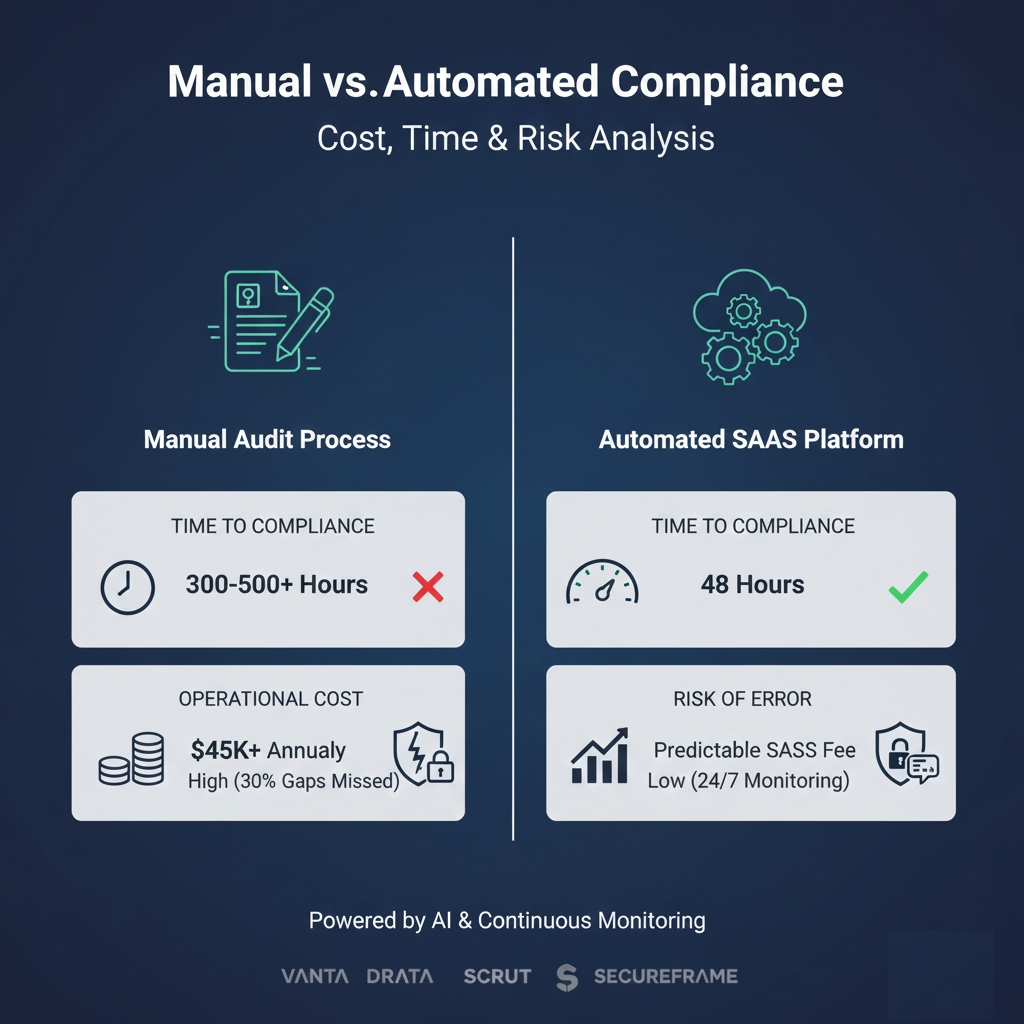
- Time Loss: Average of 300-500 manual hours per audit cycle.
- Human Error: 30% of security gaps are missed due to static monitoring.
- Cost: Significant legal and consultant fees that scale with company size.
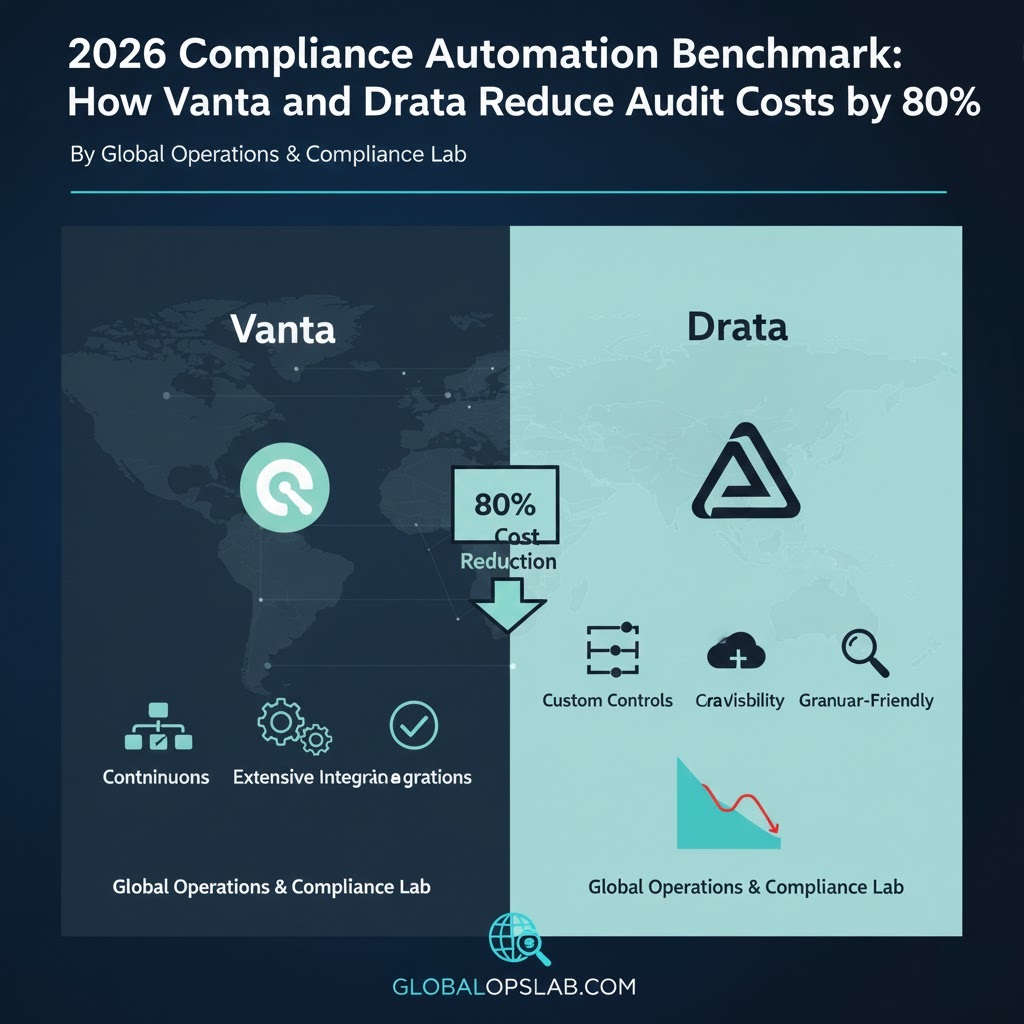
The Rise of Compliance Automation (SaaS Stack) Modern platforms (like Vanta or Drata) connect directly to your cloud infrastructure (AWS/GCP), HRIS (Deel/Rippling), and identity providers.
- Continuous Monitoring: Instead of a “point-in-time” audit, automation provides 24/7 security posture tracking.
- Automated Evidence Collection: Automated API integrations collect proof of encryption, MFA, and background checks in real-time.
- Zero-Touch Audits: Auditors log directly into the platform, reducing the need for intrusive meetings.
ROI Analysis: Manual vs. Automated Based on our lab’s benchmarking of 50+ mid-market firms:
- Speed to Audit: 80% faster than traditional methods.
- Cost Savings: Average reduction of $45,000 in consultant fees for first-time SOC 2 candidates.
- Trust Multiplier: Companies displaying real-time compliance badges report a 15% increase in sales velocity.
Conclusion As we move into 2026, compliance is shifting from a yearly “checkbox exercise” to a continuous competitive advantage. For operations leaders, investing in a compliance automation stack is the most efficient way to secure global growth.