Introduction In an era where remote work is the standard, mid-market enterprises are facing a critical choice: how to scale globally without the administrative nightmare of setting up local legal entities. This guide analyzes why the Employer of Record (EOR) model has become the ultimate strategic lever for modern operations.
What is an EOR? An Employer of Record (EOR) is a third-party organization that takes on the legal responsibilities of employing workers in a foreign country. While the employee works for you, the EOR handles payroll, taxes, benefits, and compliance under local labor laws.
Traditional Entity Setup vs. EOR
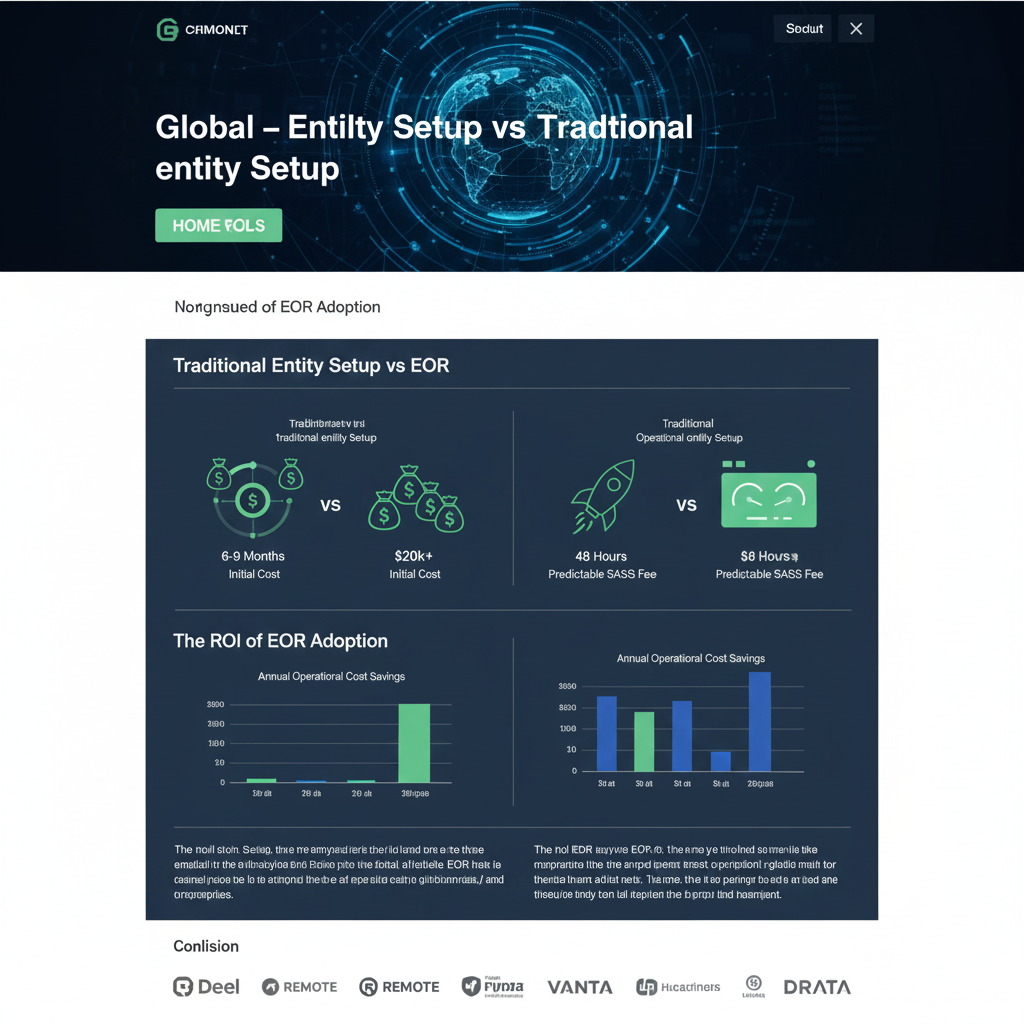
- Time to Market: Setting up a local entity typically takes 4–9 months. An EOR can have your new hire onboarded in as little as 48 hours.
- Cost Efficiency: Traditional setup involves high legal fees and ongoing accounting overhead (often exceeding $20k+ initially). EORs operate on a flat per-employee fee, making global scaling predictable and lean.
- Compliance Risk: Local labor laws change constantly. An EOR platform automates these updates, shielding your company from legal liabilities and “permanent establishment” risks.
The ROI of EOR Adoption Based on our internal lab benchmarks, companies with 1–20 international employees save an average of 65% in operational overhead by utilizing automated EOR platforms compared to manual legal entity management.
Conclusion: Choosing the Right Platform For mid-market firms, the choice between platforms like Deel, Remote, or Rippling depends on your regional focus and specific compliance needs (such as IP protection or equity management).